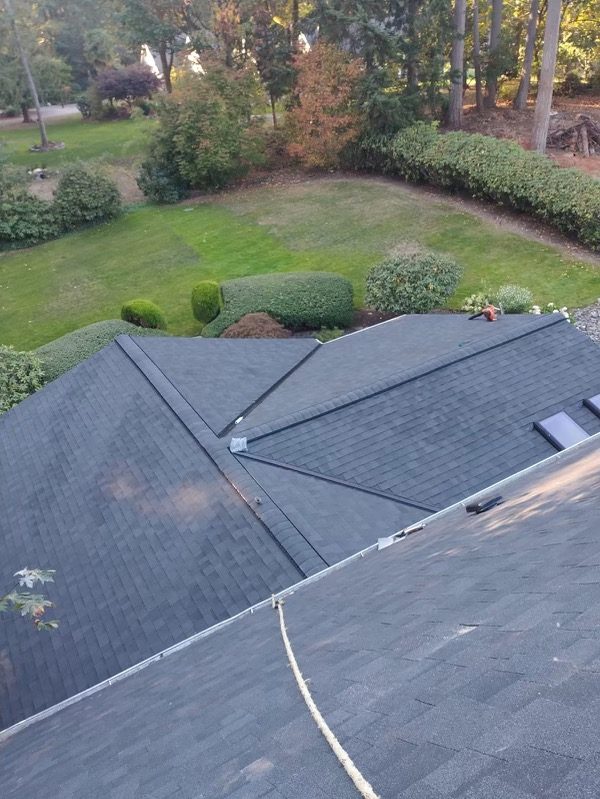
The right time to start thinking about roof replacement is when your roof is approaching the end of its expected lifespan (roughly 20–25 years for asphalt shingles in Seattle) or when you notice warning signs such as curling or missing shingles, granules in the gutters, daylight in the attic, recurring leaks, or sagging. Planning ahead — before an emergency — lets you budget, compare materials, and avoid interior damage.
Age is the single biggest factor. In the Pacific Northwest, a standard asphalt shingle roof typically lasts about 20–25 years, architectural shingles a bit longer, and metal or PVC systems much longer. If you do not know your roof's age, check home records or look for the original permit. Once you cross the 15-year mark, it is wise to start planning.
Curling, cupping, or buckling shingles; bald spots where granules have worn away; missing or cracked shingles; moss buildup that holds moisture; and sagging rooflines are all visible from the yard.
Granules that look like coarse black sand in your gutters mean the protective surface of your shingles is wearing off — a sign the roof is aging out.
Daylight coming through the roof boards, water stains, damp insulation, or a musty smell all point to a roof that is no longer keeping water out.
| Situation | Usually repair | Usually replace |
|---|---|---|
| A few damaged shingles | Yes | |
| One isolated leak, newer roof | Yes | |
| Roof past 20 years with issues | Yes | |
| Widespread granule loss | Yes | |
| Multiple leaks / sagging | Yes | |
| Selling soon, roof at end of life | Often yes |
An emergency replacement after a leak is more stressful and often more expensive, because you may also be paying to repair interior water damage. When you start thinking about it early, you can get inspections, compare shingle and metal options, line up financing, and schedule the work for good weather instead of scrambling in the middle of a storm.
Not sure where your roof stands? Roof4Life provides honest, no-pressure roof inspections across Seattle, Bellevue, Kirkland, and the Eastside. We will tell you if you have years of life left or if it is time to plan. request a free estimate.
Our climate is hard on roofs in quiet ways. We rarely get the dramatic hail of the Midwest, but months of moisture, shade, and mild temperatures create perfect conditions for moss and algae, which lift and separate shingles over time. Trapped moisture accelerates granule loss and rot in the decking below. This is why a Seattle-area roof often shows its age through moss, staining, and gradual deterioration rather than sudden storm damage — and why regular cleaning and good ventilation extend roof life here.
A surprising number of premature roof failures trace back to poor attic ventilation, not the shingles themselves. Without balanced intake and exhaust airflow, heat and moisture build up in the attic, cooking shingles from below and encouraging condensation and rot. If your roof aged out faster than expected, ventilation is one of the first things a good contractor will evaluate — and correcting it is part of making the next roof last its full lifespan.
Roofing can be done year-round in the Seattle area, but the dry stretches from late spring through early fall are ideal for tear-off and installation. Planning ahead lets you book that window rather than scrambling for an emergency replacement during the rainy season, when scheduling is tighter and weather delays are more likely. If your roof is showing warning signs as fall approaches, it is better to act before the wet months than to nurse it through and risk interior damage.
A full replacement typically means tearing off the old roofing down to the decking, inspecting and repairing the deck, installing new underlayment and flashing, adding or correcting ventilation, and laying the new roofing material. A reputable contractor protects your landscaping, manages debris and nail cleanup, and pulls any required permits. Knowing the steps helps you compare bids — a quote that skips the tear-off or the deck inspection is not the same job as one that includes them.
The most expensive roof replacement is the one you do after water is already inside, because now you are also paying to repair drywall, insulation, and sometimes framing. Replacing on your schedule — when the roof is near end of life but still keeping water out — is always cheaper and less stressful than replacing in a crisis. That is the real argument for thinking about it early.
Get a free, no-obligation estimate from Roof4Life. Serving Seattle, Bellevue, Kirkland & the entire Eastside since 2012.
Get Free Estimate →Find your home on a satellite map, trace the roof, and get the square footage in minutes. Free, and no site visit needed.